
Horton Plains National Park: 5 Amazing Tips for World's End
World's End, Mini World's End, and Baker's Falls
Your Ultimate Guide to Horton Plains National Park and World's End
Welcome to Horton Plains National Park, a breathtaking high-altitude plateau and one of Sri Lanka’s most magnificent natural attractions. As part of the UNESCO-inscribed Central Highlands, this park offers a stark contrast to the rest of the island, featuring mist-covered montane grasslands and cloud forests. The highlight is the challenging yet highly rewarding 9.5 km trek to World’s End, a sheer cliff that plunges nearly 900 meters. This guide will provide you with all the essential tips and details for a successful, safe, and amazing visit to Horton Plains National Park.
Why Horton Plains National Park is Unique
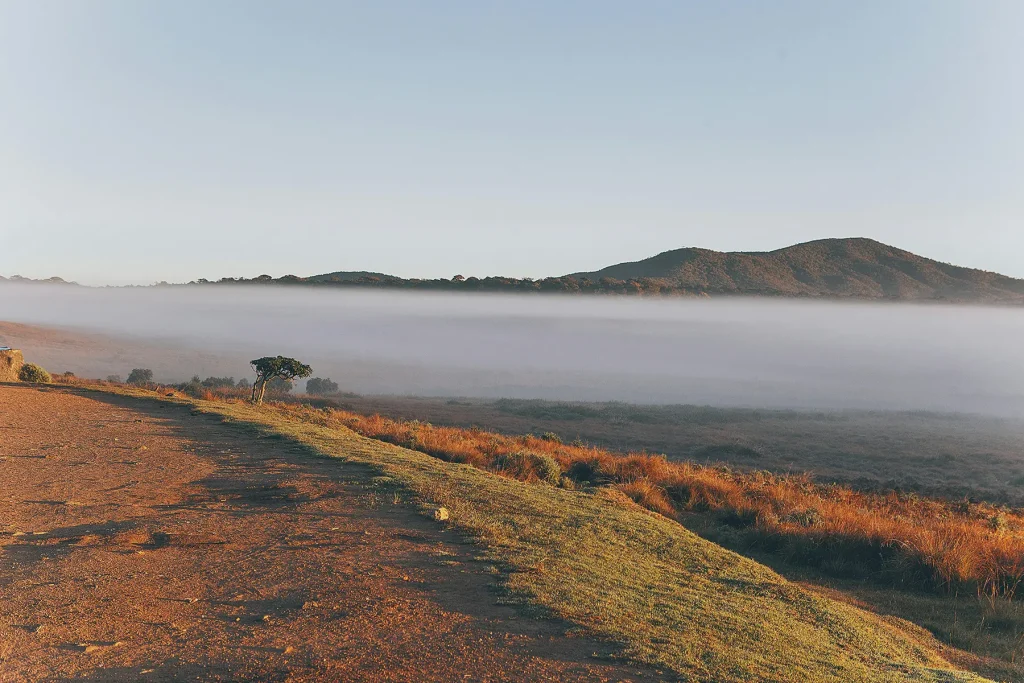
Horton Plains National Park stands at an elevation of over 2,100 meters, making it the highest and most isolated plateau in the country. This elevation creates a cool, often misty climate that sustains a unique ecosystem of cloud forest and grassland—a region locally known as Maha Eliya Thenna (Great Lighted Plain). It is the only national park in Sri Lanka where visitors are permitted to walk the trails independently without a required guide. The park is a critical watershed, serving as the source for three major Sri Lankan rivers: the Mahaweli, Kelani, and Walawe.
The Must-Do World's End Circuit Hike
The primary reason visitors flock to Horton Plains National Park is the challenging but rewarding circular trekking route. This loop is approximately 9.5 km (6 miles) and generally takes about 3 to 4 hours to complete at a leisurely pace.
The circuit trail takes you through undulating grassland and pockets of cloud forest, connecting three major attractions:
Mini World's End
A smaller, but still dramatic cliff edge that provides a stunning precursor to the main viewpoint.
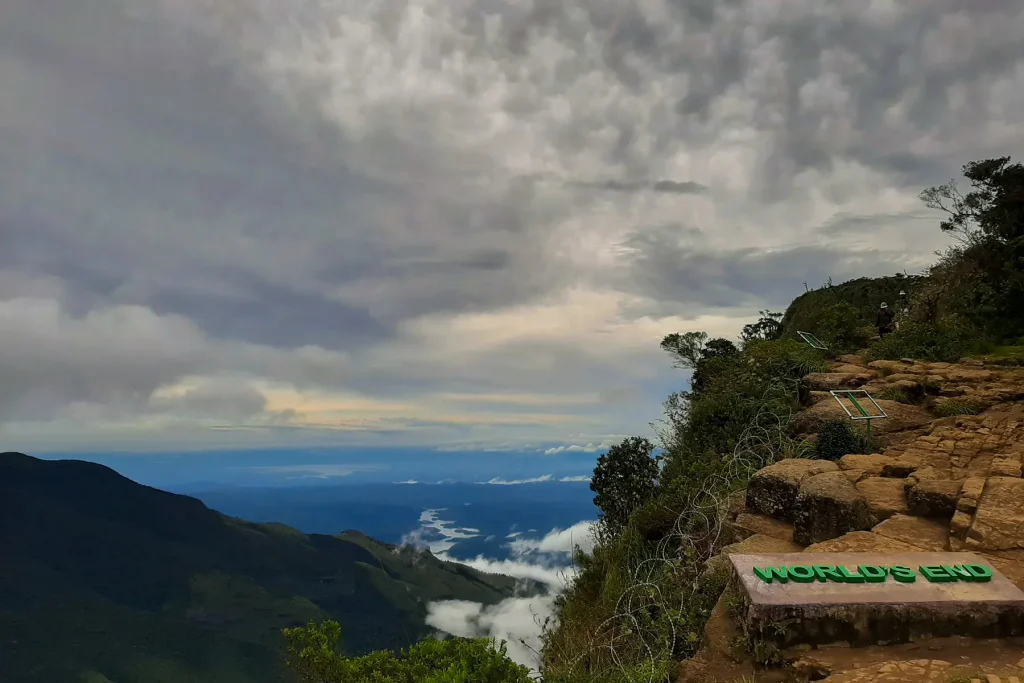
World's End
The main attraction, a terrifyingly sheer precipice with a vertical drop of 870 meters (2,854 ft). On a clear day, the view stretches across the vast valley below and sometimes all the way to the Indian Ocean.
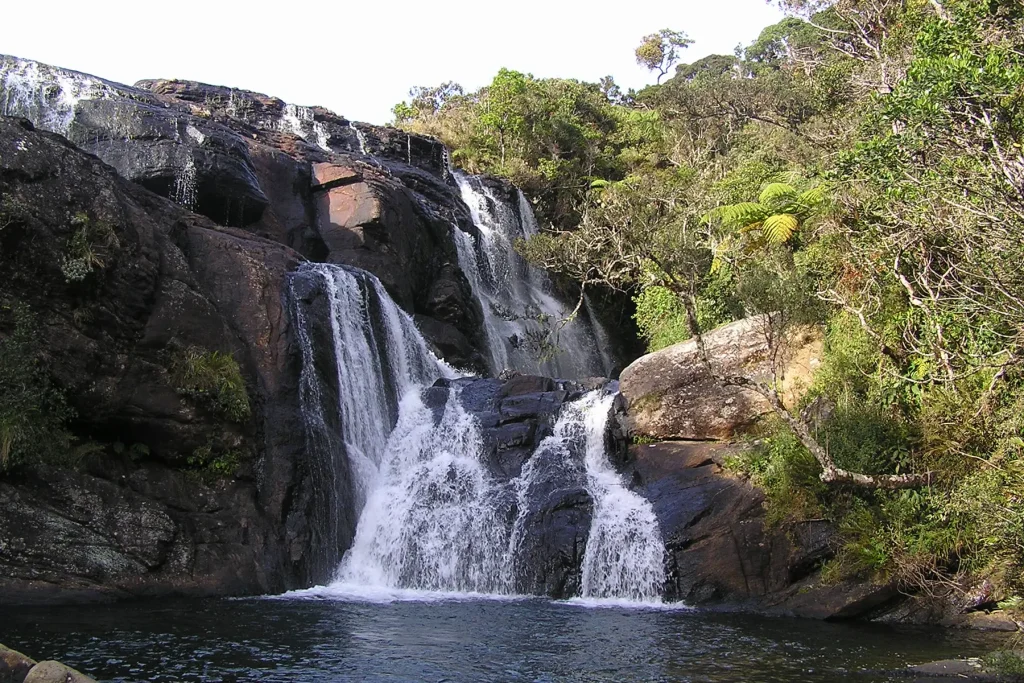
Baker's Falls
A beautiful, cascading waterfall named after the British explorer Sir Samuel Baker. Reaching the falls requires a slight detour and a descent down a set of rocky steps from the main trail.
5 Amazing Tips for Catching the View
The key to seeing the spectacular view from World’s End is timing.
1. Start Early (The Golden Rule)
You must aim to be at the World’s End viewpoint before 9:00 AM. After this time, a thick wall of mist and cloud almost inevitably rolls up from the valley, obscuring the view entirely. Plan to be at the park gate when it opens at 6:00 AM.
2. Dress in Layers
It is extremely cold before sunrise, with temperatures often near freezing. Wear a jacket, but as the sun rises and you begin hiking, you will warm up quickly. Layers are essential.
3. Mind the Plastic Rule
Horton Plains National Park has strict eco-friendly regulations. Park officials will check your bags at the entrance and confiscate all single-use plastics, including plastic wrappings on snacks. Use paper bags and reusable water bottles.
4. Hike Clockwise
Most travelers follow the loop clockwise (heading left at the fork) as this gets you to World’s End fastest. Stick with the majority to prioritize reaching the viewpoint while the weather is clearest.
5. Be Extremely Cautious
There are no safety barriers or fences at the cliff edges of World’s End. Fatal accidents have occurred. Maintain a very firm distance from the edge, especially when taking photos.
Wildlife and Ecology of the Plains
The unique, high-altitude ecosystem of **Horton Plains National Park** is a treasure trove of biodiversity, particularly for species endemic to Sri Lanka’s cloud forests.
Mammals
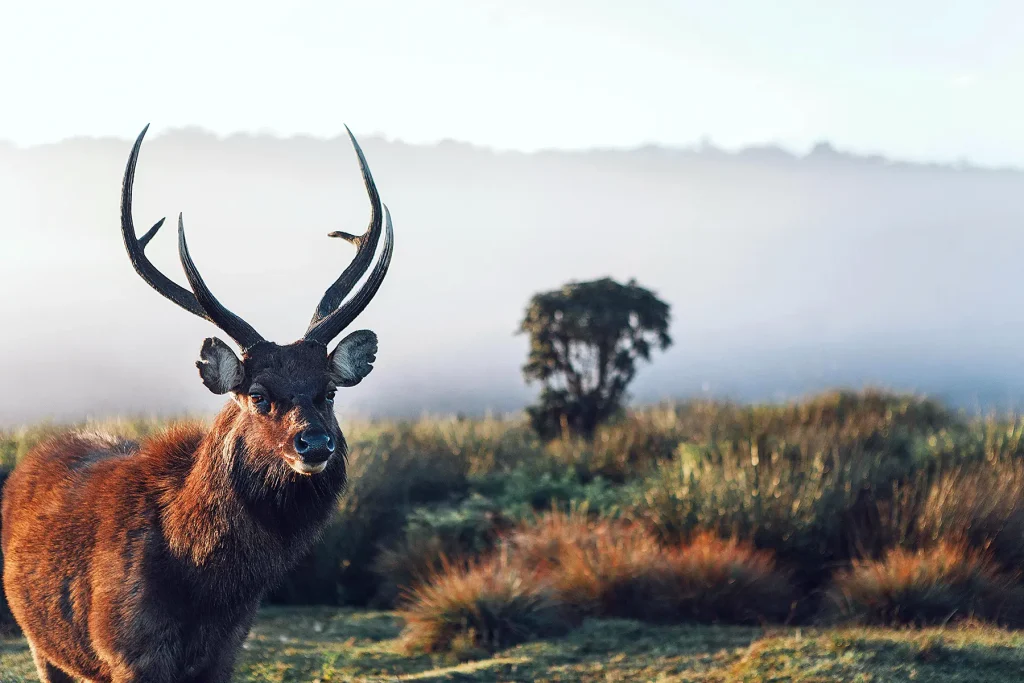
The most commonly sighted large mammal is the Sri Lankan Sambar Deer, often seen grazing peacefully on the grasslands in the early morning. Other animals, like the endemic purple-faced langur and even the elusive leopard, are present but rarely seen.
Flora
The vegetation consists mainly of grassland (patana) and dense, moss-covered cloud forest. Look for the distinct, gnarled branches of the endemic trees.
Birds
The park is recognized as an Important Bird Area (IBA), hosting several species endemic to the highlands, including the Sri Lanka Whistling Thrush and the Dull-blue Flycatcher.
Practical Logistics and Fees
Getting There
The park is typically accessed from Nuwara Eliya (about a 1.5-hour drive) or Haputale. You must arrange a taxi or tuk-tuk, as public transport does not run to the entrance gate.
Entrance Fees
The total cost for foreign visitors is relatively steep, usually combining an entrance fee, tax, and a vehicle fee, often totaling around $30–$40 USD per person.
The Trail
The trail is wide and well-maintained. While not technically difficult, the high altitude and duration (9.5 km) require moderate fitness and comfortable walking shoes. Avoid sandals, as the paths can be muddy or rocky.
Getting to the Park Entrance
To make the 6:00 AM opening time, you need to leave Nuwara Eliya no later than 5:00 AM. Many guesthouses can arrange a shared transport option to split the cost of the vehicle hire.
For details on conservation and official park rules, visit the Department of Wildlife Conservation of Sri Lanka website (DWC).
Ready to Plan Your Horton Plains Trek?
Let our experts craft a personalized itinerary that includes this unforgettable safari adventure.